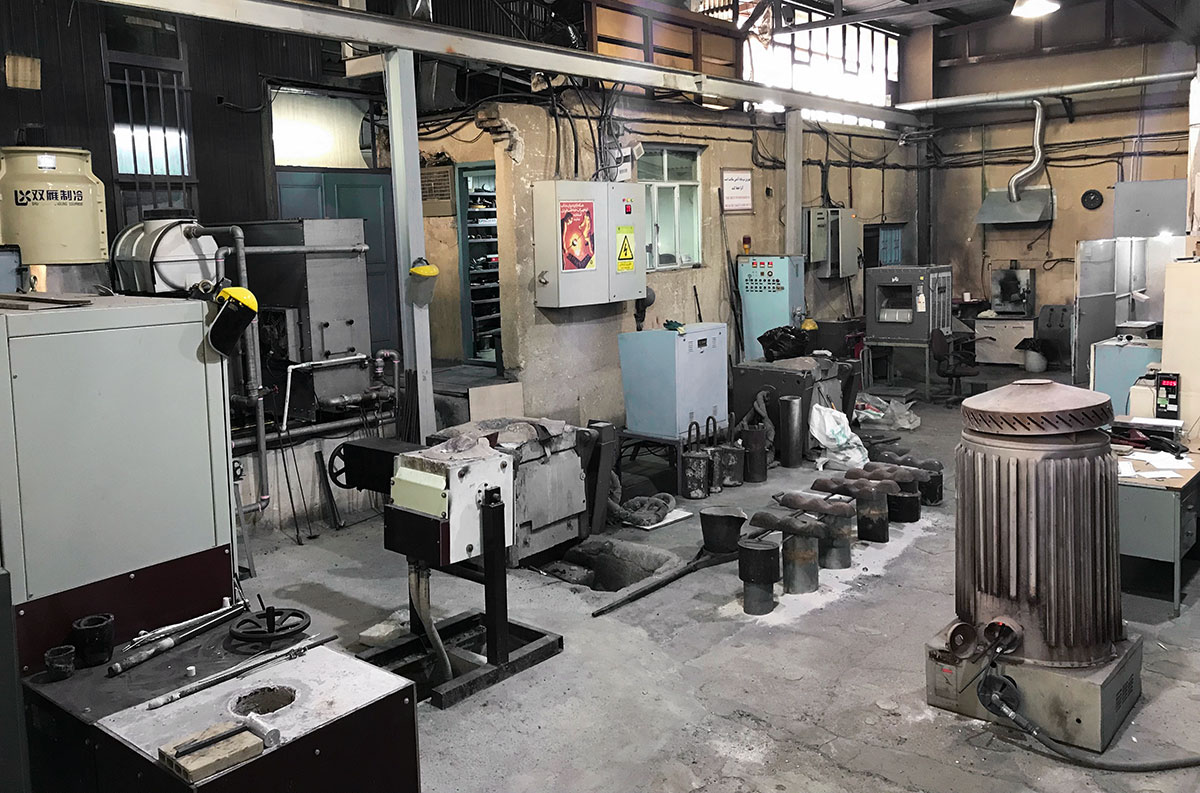
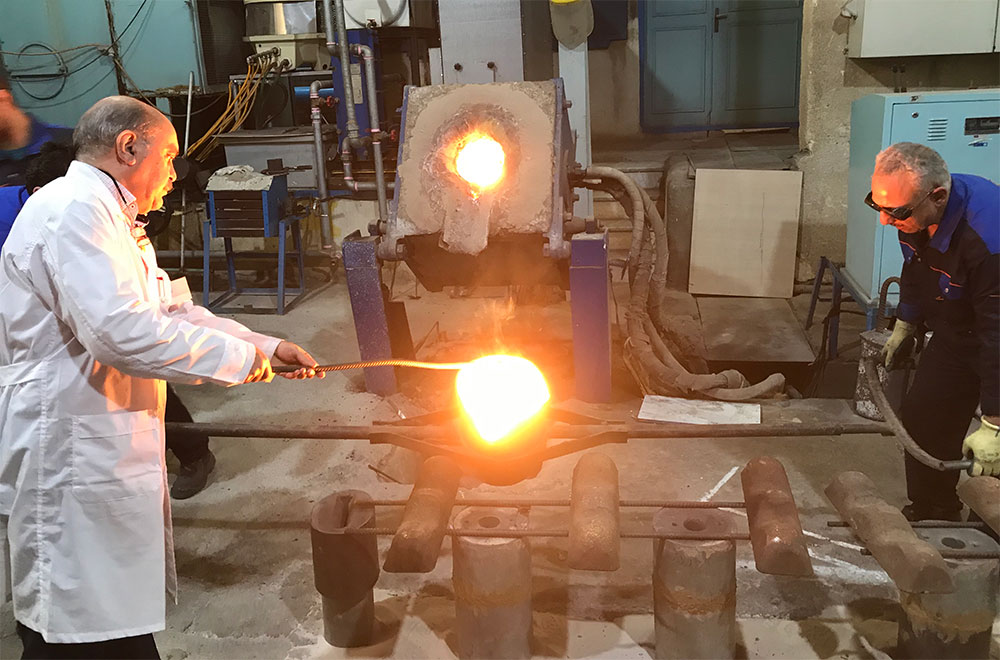
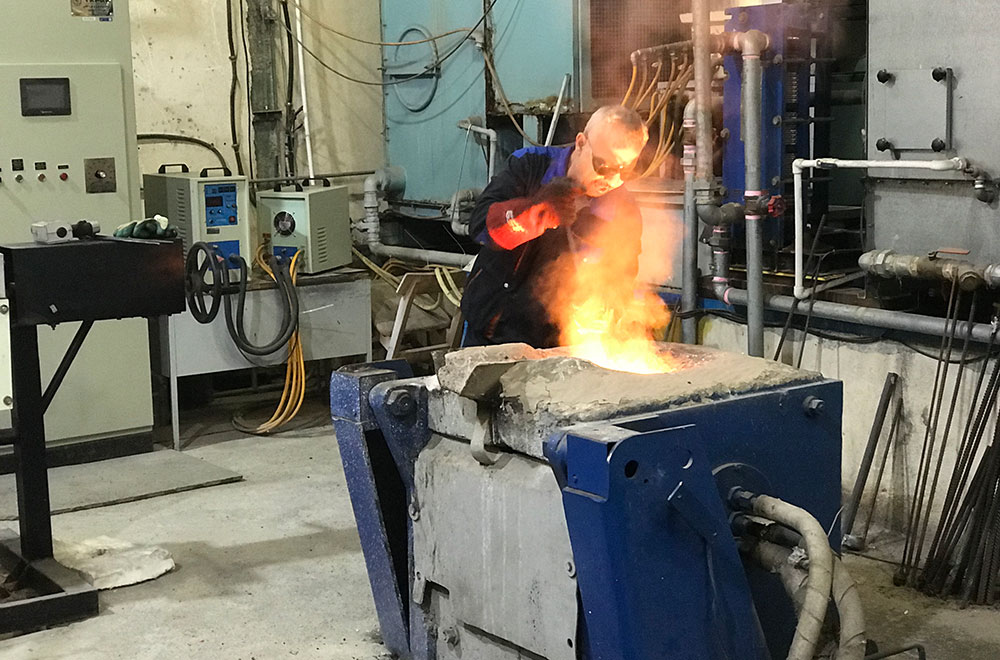
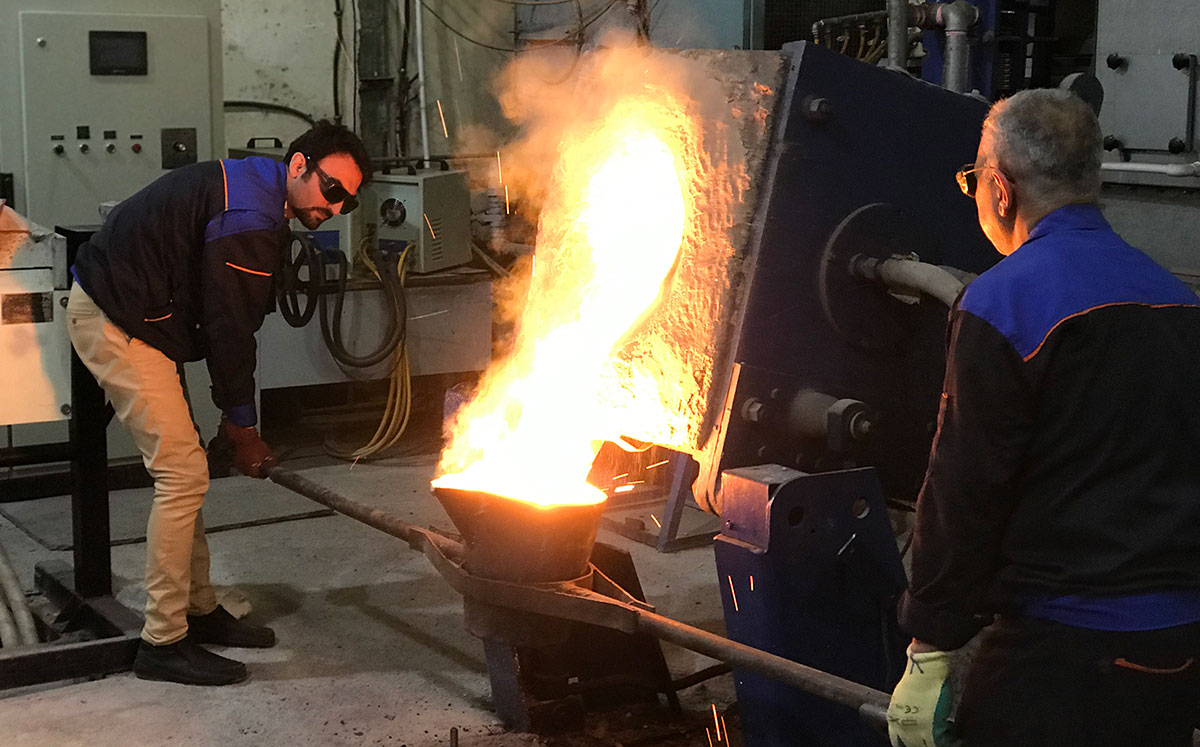
The Casting Research Group of Razi Metallurgy Research Center, with 40 years of research and industrial experience, has the capability to melt and cast various alloys in induction furnaces with capacities of 20, 5, and 2 kilograms. Melting and casting for research projects in the field of industrial alloys such as various carbon and stainless steels, manganese steels, gray and ductile cast irons, Ni-hard and Ni-resist cast irons, brasses and bronzes, aluminum alloys, zinc-based alloys, and superalloys can be carried out at this center considering the variety of available furnaces with different capacities.
Vacuum Induction Melting & Pouring
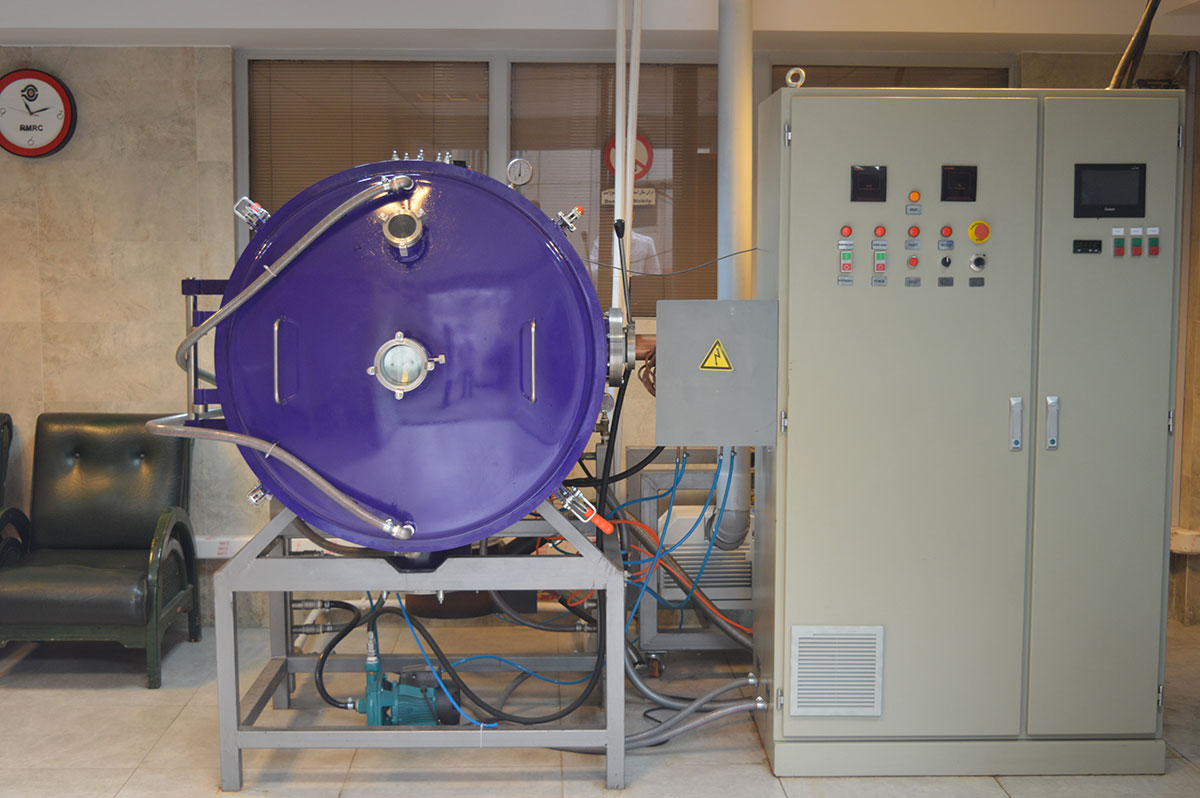
Melting and casting of metals and alloys in vacuum is one of the most widely used methods in advanced material industries and laboratories, which is used for alloying and production of precision casting parts. The most important feature of using vacuum in these furnaces is creating an atmosphere free of oxygen and environmental contaminants, which makes it possible to produce a cleaner melt.
Advantages of Vacuum Melting
- Absence of oxygen
- Melt free from any inclusions and impurities
- Ability to produce controlled alloys
- Removal of dissolved gases from the melt
Applications of Vacuum Induction Melting
- Production of superalloys
- Production of alloy steels
- Production of alloys used in manufacturing medical instruments
- Production of clean and special steels
The vacuum melting furnace of Razi Metallurgy Research Center, equipped with 3, 5, and 8 kilogram coils and capable of casting in vacuum or inert gas atmosphere, is ready to provide research melting services to valued customers.
Heat Treatment
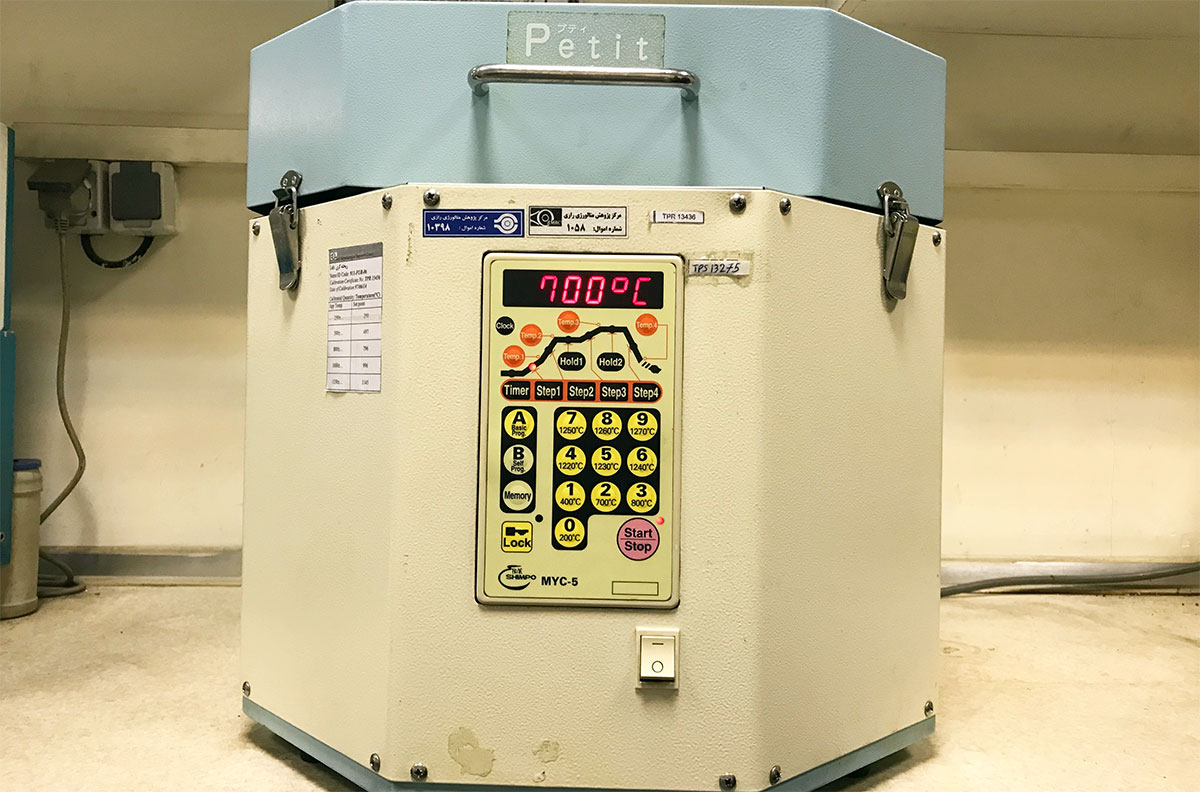
Razi Metallurgy Research Center, having laboratory and semi-industrial scale heat treatment furnaces with dimensions of 20×20×20 and 50×50×50 centimeters, with programmable heating rate capability, cyclic heating, and inert gas injection up to 1200°C, is capable of performing various heat treatment research projects including quenching, tempering, annealing, and normalizing on laboratory and industrial parts.